2013 Moore Oklahoma Tornado: EF5 That Hit the Same City Twice
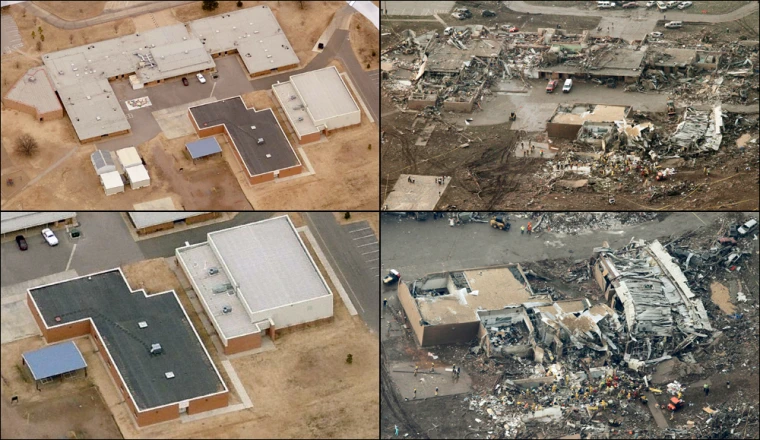
The Moore, Oklahoma EF5 tornado on May 20, 2013 killed 24 people and struck a city that had already been devastated by an F5 in 1999. Path map, school collapses, and full event archive.
Overview
On May 20, 2013, a tornado touched down northwest of Newcastle, Oklahoma at 2:56 p.m. and tracked northeast for 13.85 miles through Moore, producing EF5 damage at 200 to 210 mph. Twenty-four people died. Seven of them were children sheltering at Plaza Towers Elementary School, where the building's structure failed completely under the wind load. The path of the 2013 tornado overlapped nearly identically with the path of the 1999 F5. Fourteen years after Bridge Creek-Moore, Moore was struck again and two schools still had no built-in shelters.
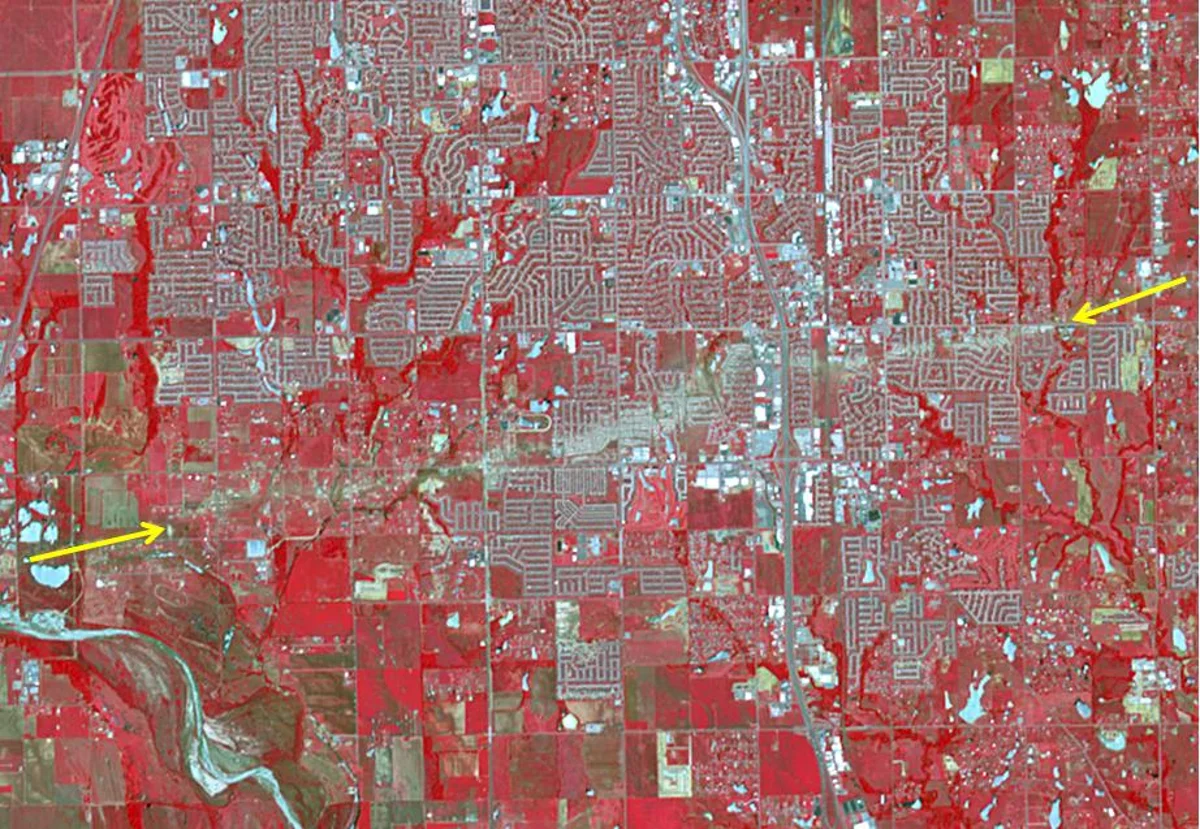
Airbus satellite scan showing the exact 13.85-mile damage swath through the heart of Moore, Oklahoma
The Setup
The setup on May 20 was a rapidly developing, high-shear environment driven by a strengthening dryline across western Oklahoma. The day was flagged as a significant tornado risk, but the specific location and timing of storm initiation made precise positioning difficult. Multiple cells competed for dominance along the dryline before one supercell northwest of Newcastle began rapid intensification and produced a tornado within minutes. Cell mergers during the early storm phase contributed to an unusually quick escalation from storm initiation to violent tornado contact with the ground.
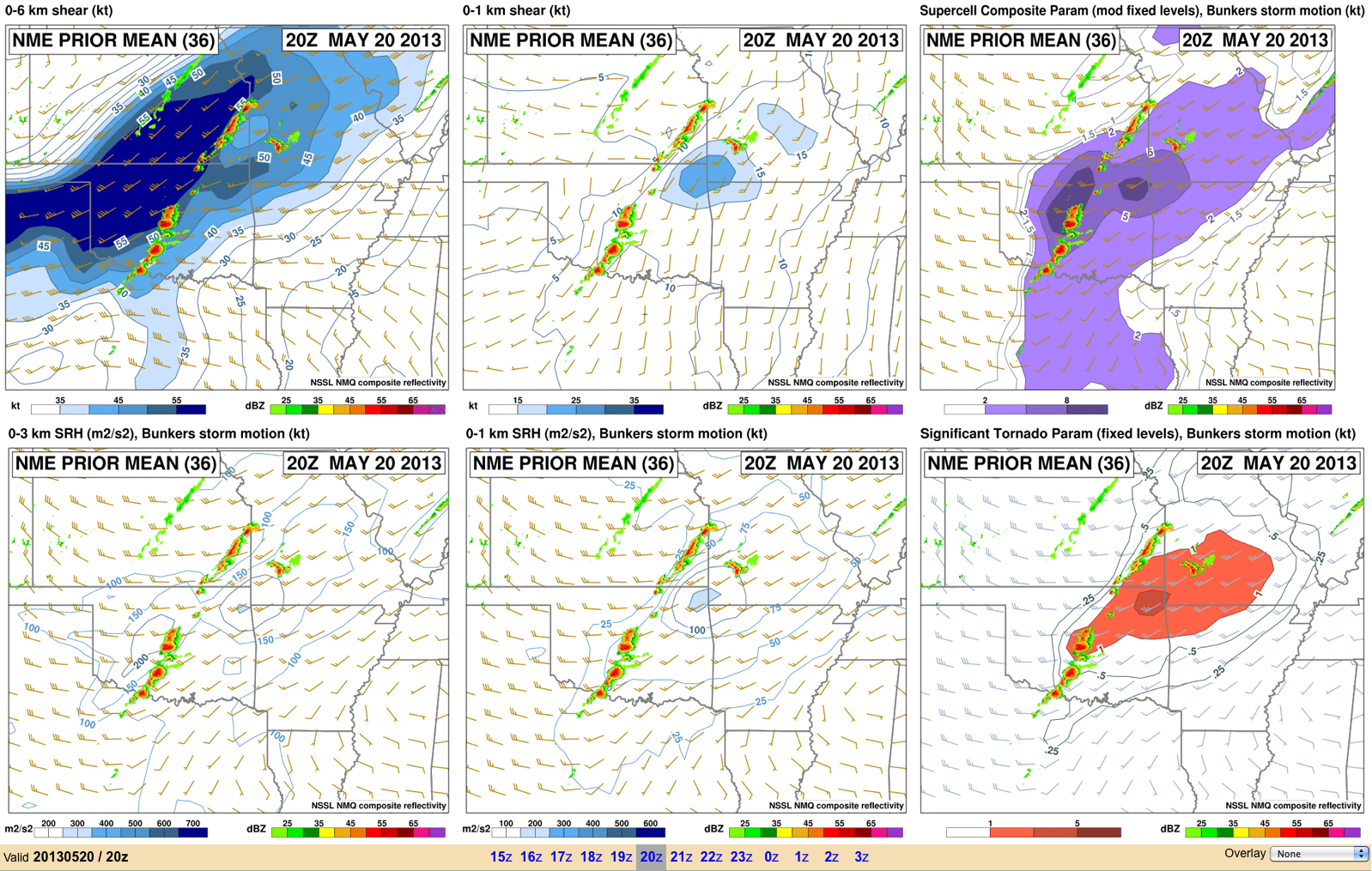
SPC mesoscale discussion from May 20, 2013, annotating the rapidly developing supercell northwest of Moore
The Tornado
The tornado was described by witnesses inside Moore as a massive black wall that visually eliminated the southern half of the sky. At its widest, the wind field was 1.1 miles across. It moved at 20 mph through the urban core of Moore, giving residents time to hear warnings but not always enough time to reach substantial shelter. The tornado struck Briarwood Elementary and Plaza Towers Elementary directly. At Plaza Towers, the roof and exterior walls failed under the EF5 loads, leaving children and teachers with no overhead protection. The NWS confirmed EF5 winds directly over the school building.

Ground-level photograph of the Moore EF5 as a massive black wall approaching through residential streets
The Schools
The structural analysis of both Briarwood and Plaza Towers produced findings that were hard for Oklahoma to absorb. The buildings had been constructed to existing code. They were not substandard in any way that an inspection would have identified. Standard unreinforced masonry construction, in sufficient wind loads, is simply insufficient. The engineering consensus following the 2013 survey was direct: no above-ground, unreinforced school structure in a frequent tornado impact zone can be considered safe in an EF5 event. The question was not whether the buildings met code. It was whether the code was adequate for the environment.
What Changed
After the May 20, 2013 Moore tornado, Oklahoma strengthened attention to school shelter standards and continued expanding use of its SoonerSafe residential rebate program, which had already begun before the storm. FEMA and state agencies also used Moore as a major post-disaster shelter-performance case study.
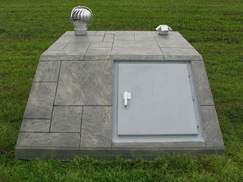
A completed residential storm shelter installed in a Moore home under the post-2013 Oklahoma safe room program