1990 Plainfield Illinois Tornado: The F5 That Shocked the Chicago Suburbs
The Plainfield, Illinois F5 tornado on August 28, 1990 killed 29 people in the Chicago suburbs with almost no warning. A rare violent tornado in an unexpected location — full archive and path map.
Overview
August 28, 1990 remains the only time in recorded American history that an F5 tornado occurred during the month of August. It formed near Oswego, Illinois, at 3:15 p.m. and moved southeast through Plainfield in under 30 minutes, killing 29 people and injuring 350. The tornado was completely invisible. Wrapped in the heavy precipitation of a High-Precipitation supercell, it appeared to residents as nothing more than a dark rain curtain until it was already on top of them. No warning was issued before it struck.
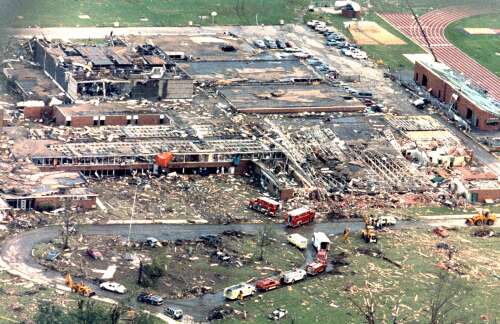
Photograph of Plainfield High School after the tornado, showing structural failure of the gymnasium roof
The Setup
The Plainfield environment was a meteorological anomaly. CAPE values reached 8,000 J/kg, one of the highest ever measured in Illinois, but low-level wind shear was deceptively weak. Forecasters saw instability but not the classic shear signature of a tornadic environment. The storm developed from a High-Precipitation supercell, a type that produces heavy rainfall within its core and can hide rotation entirely within rain. The storm also moved from northwest to southeast, the opposite of the typical northeast track that residents and even forecasters had been conditioned to expect.
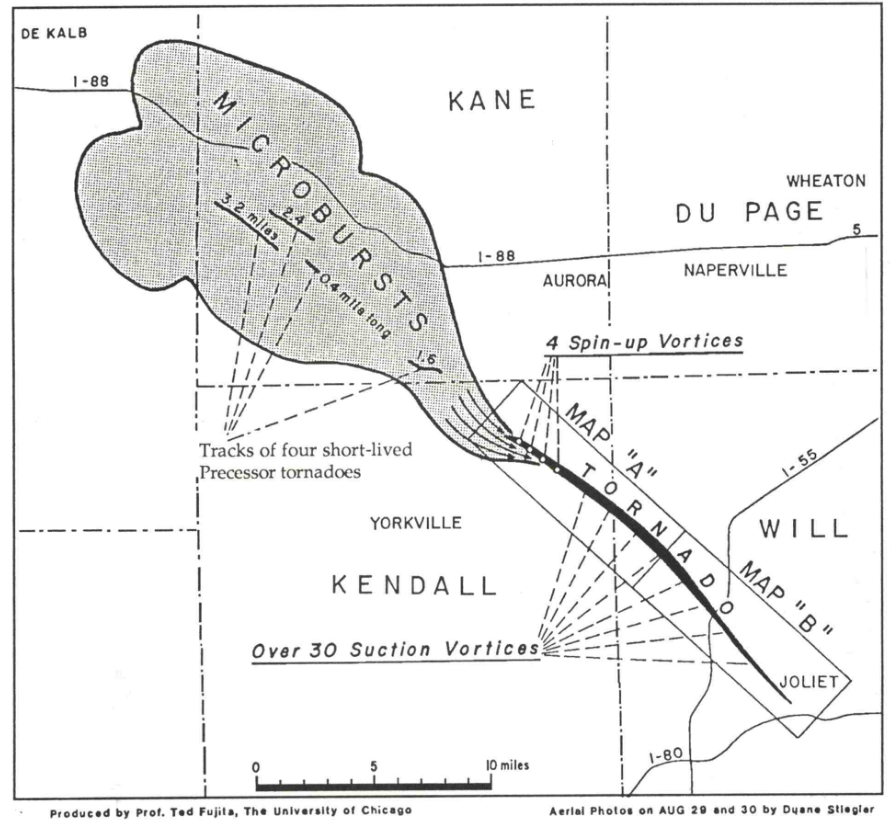
Fujita's diagram of the Plainfield microburst complex that preceded the tornado formation
The Tornado
The tornado struck Plainfield High School during administrative setup before the first day of classes. The gymnasium roof failed catastrophically, and portions of the building collapsed. In the residential areas and farmland to the east, the ground scouring was absolute. Mature corn crops were stripped to bare soil. The NWS conducted post-event analysis and found that the damage indicators were consistent with an F5 rating: steel-reinforced structures displaced from foundations, topsoil scraped from fields, and a 20-ton tractor-trailer thrown more than half a mile from a nearby highway.
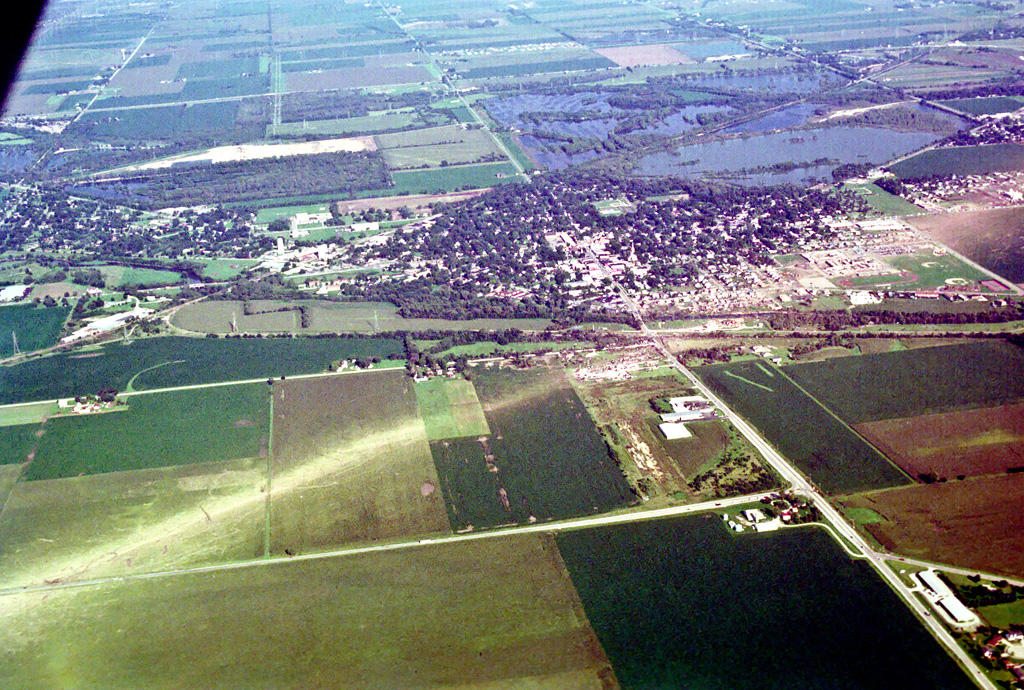
Aerial photograph of the Plainfield damage swath showing intense ground scouring through agricultural fields
The Warning Failure
The Plainfield tornado exposed a critical vulnerability in the national warning system. The Weather Surveillance Radar in Chicago was a WSR-57, a system that could detect precipitation but could not reliably detect rotation hidden within it. The HP structure of the storm obscured the hook echo signature that forecasters relied on to identify tornado-producing cells. The NWS issued no warning before the tornado struck the school. In the subsequent review, the inadequacy of the aging radar network was identified as the primary technical failure.
What Changed
Plainfield underscored the limitations of the pre-Doppler radar era. NEXRAD had already been planned, but the disaster became part of the broader case for faster weather-service modernization. Doppler velocity data made it much easier to detect storm rotation, including in rain-wrapped storms that were difficult to diagnose with older reflectivity-focused radar alone. The event also became a classic example of a dangerous northwest-flow tornado in the Midwest.
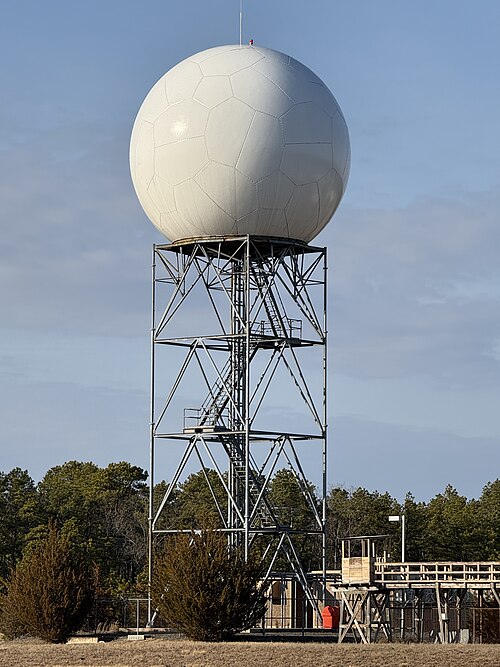
NEXRAD WSR-88D installation at a National Weather Service field office, representing the post-Plainfield radar upgrade