What Are Asperitas Clouds?
Asperitas clouds were formally classified in 2017, the first new cloud type added to the International Cloud Atlas in over 50 years. What they are, how they form, and why they are effectively impossible to predict.
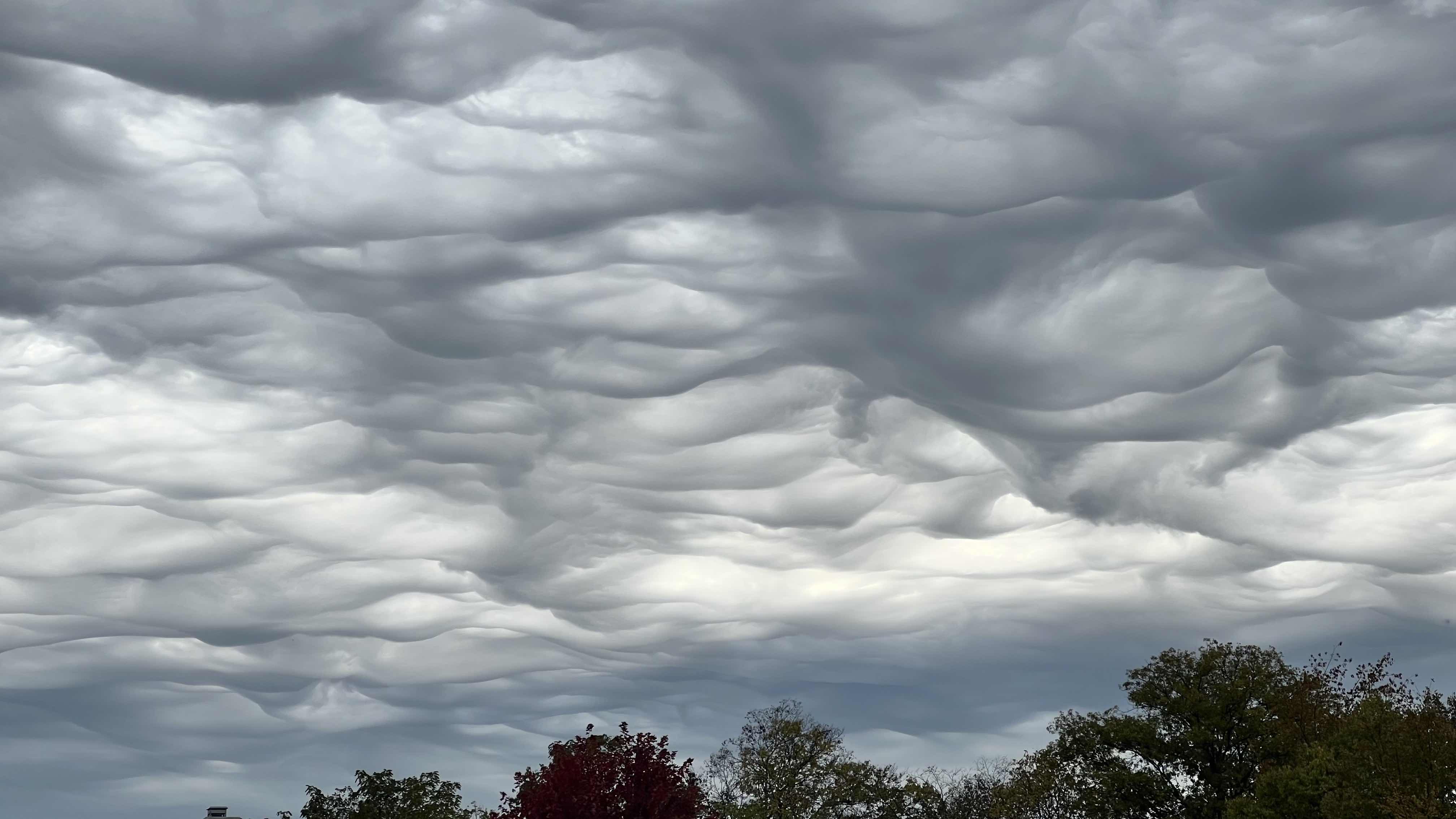
Asperitas clouds were added to the World Meteorological Organization's International Cloud Atlas in 2017, making them the first new cloud classification in more than fifty years. The name comes from the Latin for roughness. The appearance earned that name: the cloud base resembles the surface of a wind-disturbed sea viewed from below, a chaotic undulating mass of dark lobes and troughs without any consistent direction.
Classification History
The asperitas category does not represent a recently discovered cloud. Photographs matching the description had been accumulating for years in meteorology communities and among amateur observers. The Cloud Appreciation Society, a UK-based organisation that catalogues unusual cloud formations, submitted a formal proposal to the WMO following a surge of photographic documentation in the early 2000s.
The formal classification process required the international meteorological community to agree that asperitas represented a genuinely distinct formation that did not fit existing categories. The decades between the previous classification and 2017 reflect how rarely atmospheric conditions produce formations that fall entirely outside the existing taxonomy.
How They Form
Asperitas are classified as a variety of stratocumuluscloud, appearing at the bottom of a stratocumulus or altocumulus layer. Their formation is associated with strong instability at the cloud base level combined with wind shear between the cloud layer and the air below it.
The mechanism most commonly cited involves Kelvin-Helmholtz instability, the same process that produces breaking waves when two fluid layers moving at different speeds interact at their boundary. When wind speed or direction shifts significantly across the cloud base, the interface between the cloud and the clear air beneath it becomes unstable. The result is a wave-like, undulating structure at the cloud base that can intensify into the chaotic, heavy appearance of asperitas.
Unlike lenticular clouds, which form in very specific orographic conditions and maintain a relatively stable shape as long as those conditions persist, asperitas form in more variable atmospheric environments. They are not anchored to a terrain feature and their structure changes quickly.
Rarity and Predictability
Asperitas are genuinely rare in the sense that the specific combination of conditions required to produce the most dramatic examples does not occur reliably. They have been photographed on every continent, but the striking, fully developed examples that sparked the classification effort are uncommon even in regions where the relevant atmospheric conditions are not unusual.
There is no reliable way to forecast asperitas days in the way that a storm chaser might target a setup for supercell development. You cannot look at a sounding and confidently predict that asperitas will form in a particular location at a particular time. They are documented after the fact far more often than they are anticipated.
The scientific literature on asperitas remains comparatively thin. The 2017 classification formalized the category but did not resolve all questions about the range of formation mechanisms that can produce the appearance. This is partly why the article brief for this piece acknowledges limited source material honestly: at time of writing, the mechanistic research is still developing.
What the asperitas classification demonstrates is that the atmosphere still produces things that existing frameworks do not cleanly describe, and that sometimes the most useful contribution is simply careful documentation of what you saw.
Archives for storm chasers and meteorology obsessives
Museum-quality prints and technical apparel built on real data. Designed by those who chase.