What Is the Enhanced Fujita Scale?
The Enhanced Fujita Scale replaced the original Fujita Scale in 2007. What changed, why the wind speed thresholds shifted, and what the damage indicator system actually measures.
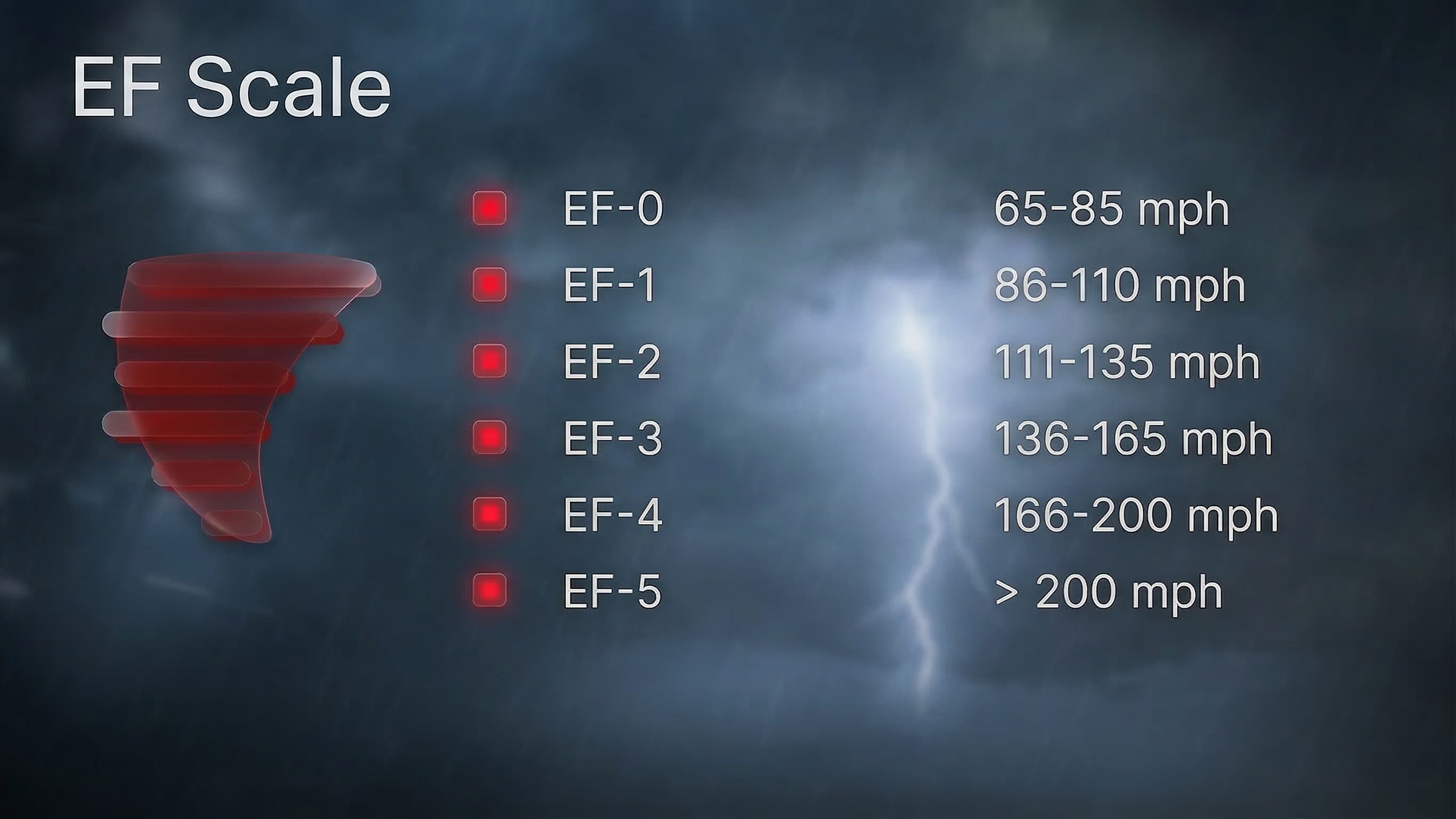
The Enhanced Fujita Scale replaced the original Fujita Scale in the United States on 1 February 2007. The replacement addressed a fundamental problem with the original scale: it assumed a fixed relationship between wind speed and damage that engineering research had shown was not accurate. The EF Scale did not change what is being measured. Tornadoes are still rated by damage. It changed the framework used to convert that damage into a wind speed estimate.
Why the Original Scale Was Replaced
Ted Fujita introduced his original scale in 1971 based on direct damage observation and his own engineering assessments. His wind speed thresholds were estimated before the era of systematic engineering research into how specific structure types fail under load. The original scale was a significant achievement, but it was built on derived estimates rather than controlled analysis of building failure.
The Fujita Scale served for over three decades. During that time, engineers and atmospheric researchers conducted extensive studies of how different types of structures respond to wind loading. They found that many buildings assigned to higher damage categories in the original scale could have been destroyed at lower wind speeds than Fujita estimated, particularly given the wide variation in construction quality across American housing stock.
The result was an upward bias in historical wind speed estimates. Buildings were being destroyed at F4 and F5 speeds, the data suggested, at wind speeds closer to the F3 range. The original scale was not entirely wrong, but it was systematically off in ways that mattered for research and for comparing historical events.
The Damage Indicator System
The EF Scale's key innovation was the introduction of 28 specific Damage Indicators: defined structure types with known failure characteristics. Each Damage Indicator has multiple Degrees of Damage, ranging from minor damage to complete destruction, each associated with an estimated wind speed at the time of failure.
Examples of Damage Indicators include one and two-family residences, manufactured homes, warehouses, school buildings, hardwood trees, and softwood trees. Each has a structural baseline that allows a trained damage survey team to assess, for a given structure type, what wind speed was likely required to produce the observed damage.
The rating of a tornado under the EF Scale is determined by the highest Degree of Damage documented anywhere along the path across any applicable Damage Indicator. A tornado that destroys the upper portion of a well-constructed house receives a rating based on that destruction. If it also destroys a poorly built barn more completely, the barn destruction does not elevate the rating if the equivalent Degree of Damage for a house corresponds to a lower wind speed.
This structure makes EF ratings more defensible and more reproducible than the original scale, because two different survey teams examining the same path should converge on similar wind speed estimates.
How the Wind Speeds Compare
The EF Scale ratings run from EF0 to EF5, but the wind speed thresholds shifted downward relative to the original scale.
| Rating | EF Scale (mph) | Original F Scale (mph) |
|---|---|---|
| 0 | 65–85 | 40–72 |
| 1 | 86–110 | 73–112 |
| 2 | 111–135 | 113–157 |
| 3 | 136–165 | 158–206 |
| 4 | 166–200 | 207–260 |
| 5 | >200 | >261 |
An EF5 begins at 200 mph rather than the original F5 threshold of 261 mph. This does not mean modern tornadoes are rated more generously, or that strong tornadoes have become weaker. It means the engineering analysis showed that the destruction previously attributed to 261 mph winds could be produced by 200 mph winds in realistic construction conditions.
The Limitations That Remain
The EF Scale inherits the central limitation of the original: it rates damage, not wind speed. A tornado that tracks across open land with no Damage Indicators available cannot be rated at all, regardless of how strong the winds actually were.
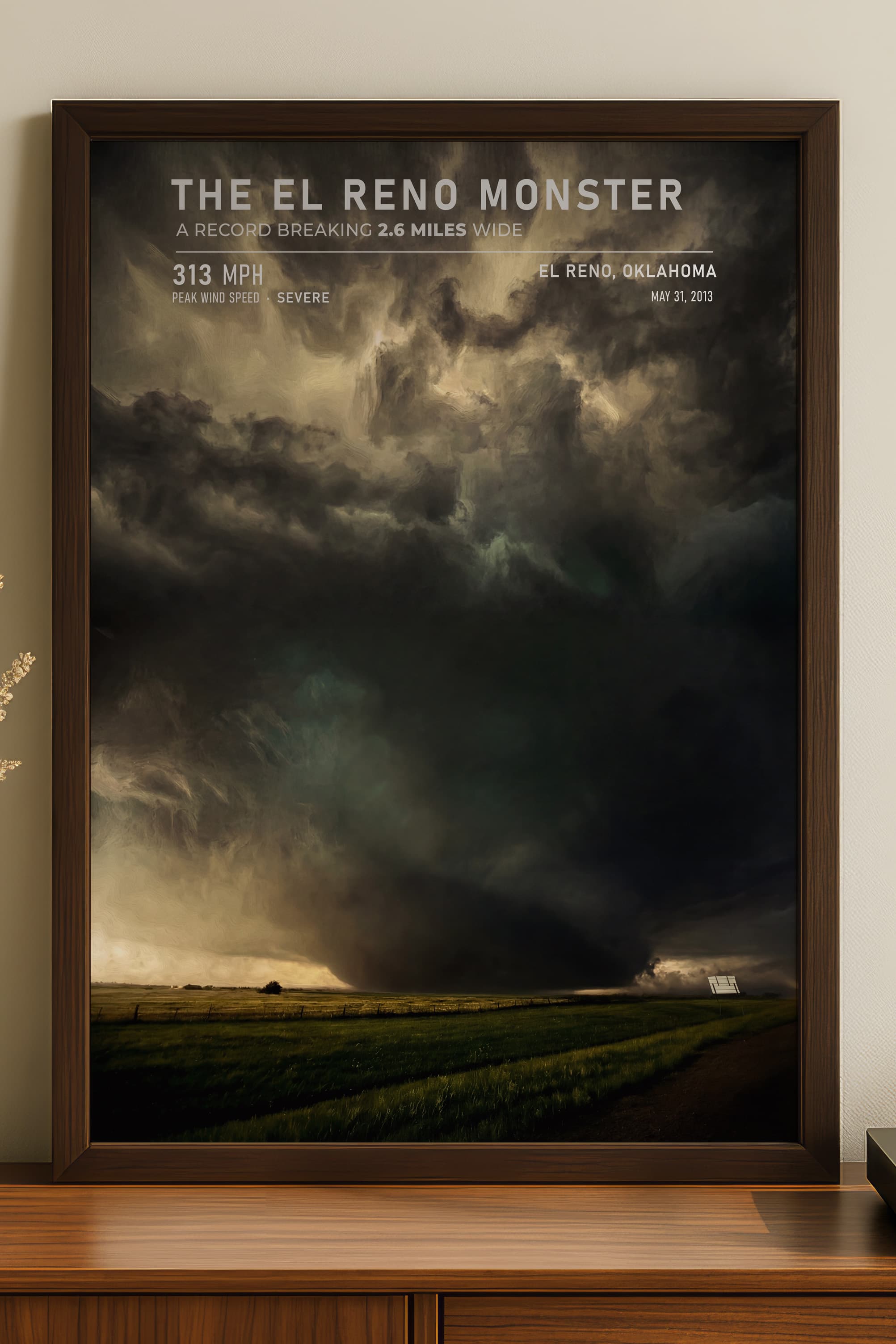
The El Reno tornado of 2013 illustrates this concretely. It received an official EF3 rating based on the structural damage it caused. Mobile Doppler radar measured wind speeds within the circulation, then 2.6 miles across, that likely exceeded 295 to 300 mph. The discrepancy exists because the tornado's most intense portions moved over open farmland. The structures it damaged most were not sufficient to document EF5-level wind speeds.
This is not a flaw in the EF Scale specifically. It would be a problem with any damage-based rating system. The problem is intrinsic to using damage as a proxy for wind speed when tornadoes frequently do not interact with anything built to known engineering specifications.
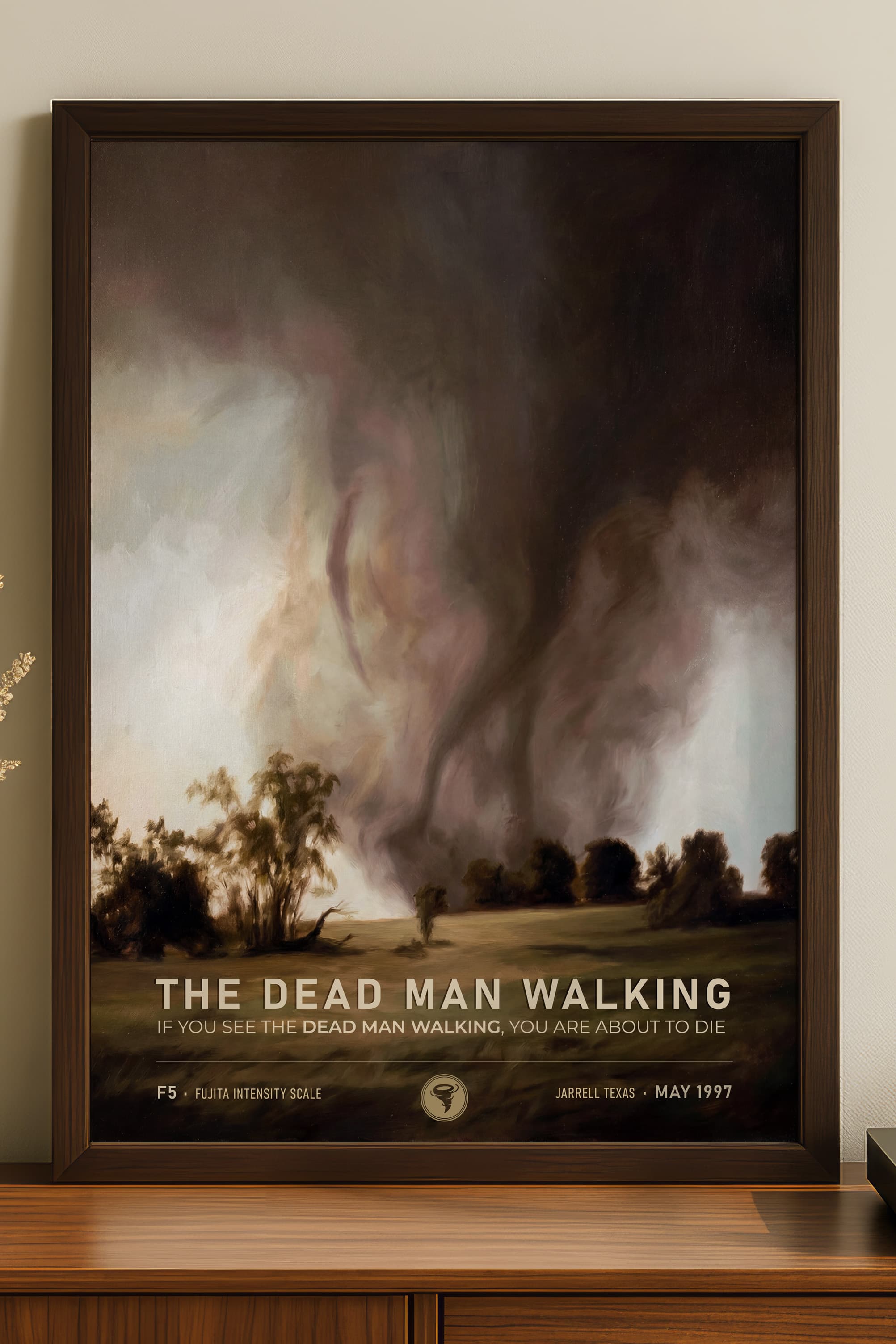
The Jarrell tornado of 1997 was officially rated F5 under the original scale. It had abundant Damage Indicators to rate: it passed directly over a populated subdivision and destroyed the homes comprehensively. What it destroyed documented what it was. What a tornado misses is always unknown.
Applying the EF Scale in Historical Context
All tornado records before 1 February 2007 use F ratings. Historical comparisons between pre-2007 and post-2007 events require awareness that the F and EF scales are similar but not identical. Many older tornadoes have been re-analysed using EF criteria, and some historical ratings have been adjusted downward as a result.
Research involving tornado climatology, frequency trends, and intensity distributions needs to account for this discontinuity. An apparent decrease in EF4 and EF5 ratings after 2007 relative to F4 and F5 ratings before 2007 partly reflects the revised thresholds rather than any real reduction in violent tornado frequency.
The EF Scale is the current standard in the United States and is used by countries including Canada and Australia with minor modifications. It is a more rigorous framework than its predecessor, and its limitations are inherent to the measurement problem rather than to the scale design.
Archives for storm chasers and meteorology obsessives
Museum-quality prints and technical apparel built on real data. Designed by those who chase.