Tornado Warning vs Tornado Watch: The Difference
A tornado watch and a tornado warning are not the same thing and do not call for the same response. What each one means, who issues it, and what to do when you receive one.
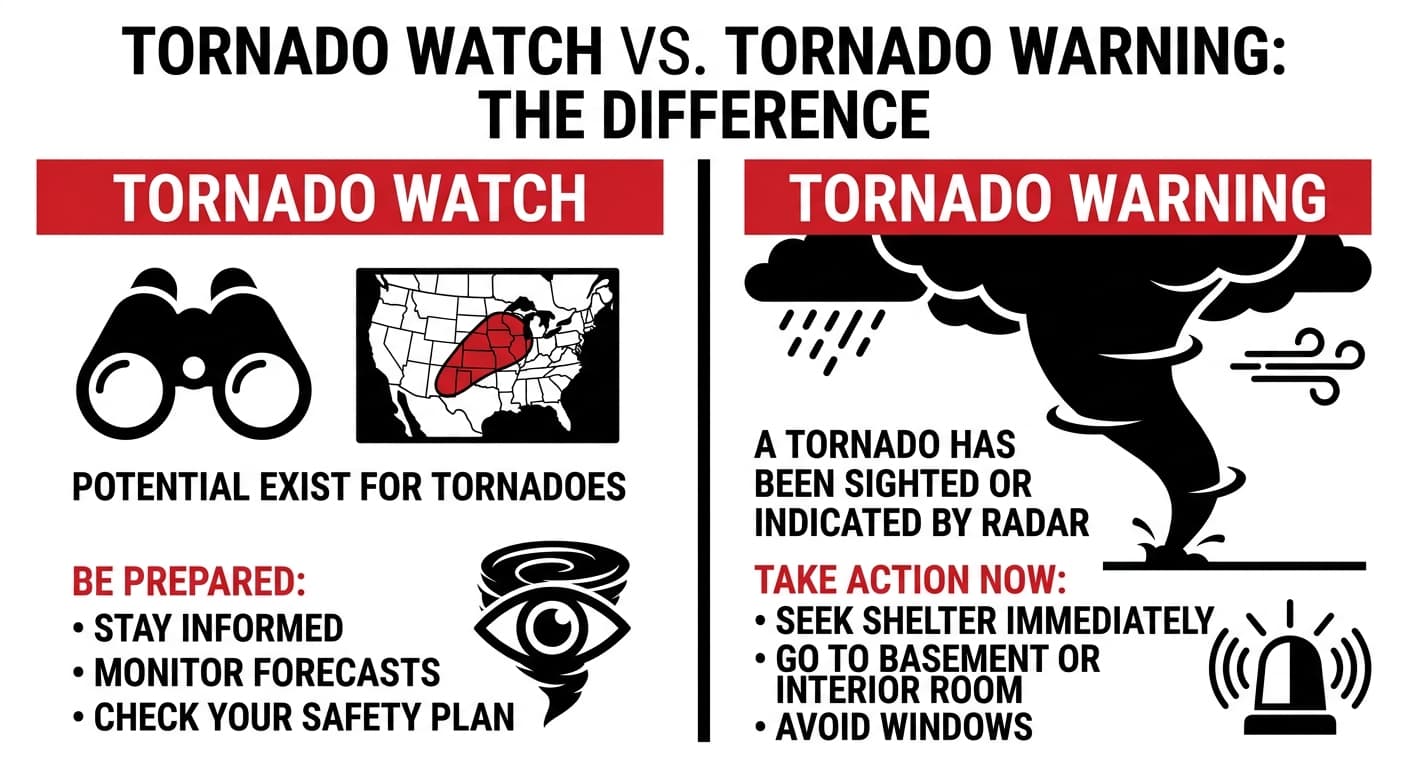
A tornado watch and a tornado warning mean different things and require different responses. Confusing them is common and the confusion has consequences. The definitions are precise and worth knowing exactly.
Tornado Watch
A tornado watch is issued by the Storm Prediction Center in Norman, Oklahoma. The SPC issues watches for areas where atmospheric conditions have become favourable for tornado-producing thunderstorms to develop. A watch does not mean a tornado is occurring or is imminent. It means conditions are right for one to develop.
Watch areas are large, typically covering several counties or multiple states, and watches are issued hours before severe weather is expected. They give emergency managers, storm spotters, public safety officials, and the general public time to prepare and be alert.
When a tornado watch is in effect, the appropriate response is to be aware of the weather situation and be ready to act quickly if conditions escalate. Monitor local weather. Know where you would shelter. Do not stop what you are doing, but do not ignore the situation either.
Tornado Warning
A tornado warning is issued by a local National Weather Service office, not the SPC. It is issued for a much smaller area, typically a county or a portion of a county, and for a much shorter time horizon. Tornado warnings are issued when a tornado has been confirmed by a trained storm spotter or law enforcement, or when Doppler radar indicates rotation strong enough to produce a tornado.
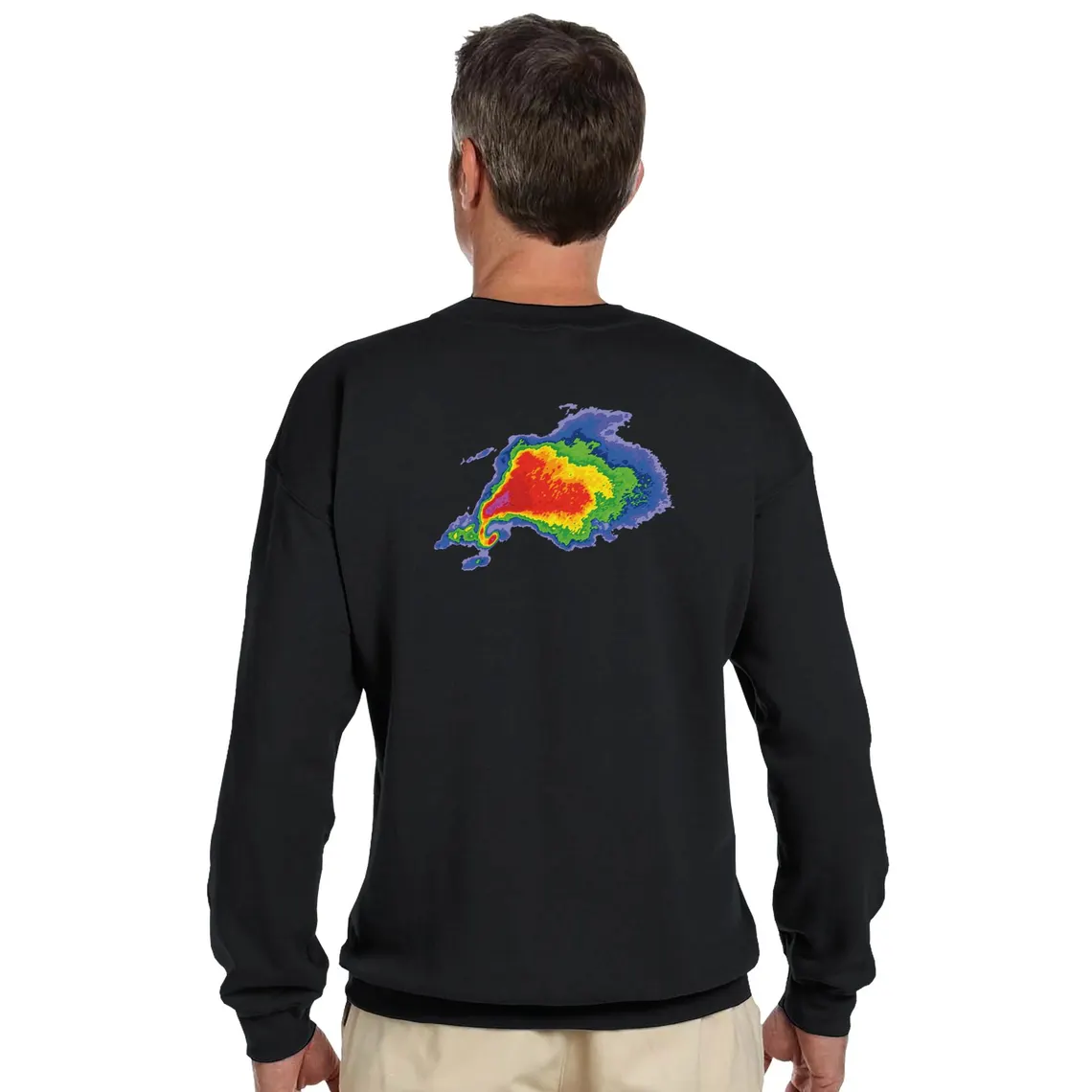
The hook echo is one of the primary radar signatures that precedes a tornado warning. When a hook echo is confirmed by a velocity couplet on Doppler data showing strong rotation, NWS forecasters have the evidence to issue a warning before a tornado is visually confirmed.
When a tornado warning is issued for your location, take shelter immediately. This is not a recommendation. A tornado may already exist and may be moving toward you. Move to the lowest floor of a sturdy building and put as many walls between yourself and the outside as possible. Away from windows. Interior room, ideally without exterior walls.
Why the Distinction Matters
The word order is deliberate. A watch means watch for developing conditions. A warning means a threat is occurring or is imminent and you need to act now.
The most common communication failure during severe weather events is people treating a warning the way they should treat a watch: taking note of it but continuing what they are doing. The window between when a tornado warning is issued and when the tornado arrives can be under ten minutes in fast-moving storm environments. Waiting to see if the warning is real before finding shelter uses up time that may not exist.
Understanding where these alerts come from also helps calibrate their reliability. The SPC issues watches based on atmospheric analysis. NWS offices issue warnings based on direct evidence from radar or visual confirmation. Both organisations use established protocols. Neither talks about watches or warnings casually.
For Storm Chasers
If you are in the field, the distinction operates differently. Chasers track storms before warnings are issued, often using the same data that feeds the warning decision. A hook echo on your RadarScope, a velocity couplet tightening on Doppler velocity, and a developing wall cloud in your line of sight tell you what the warning is about to say.
The storm chasing beginners guide covers how chasers interpret radar and position themselves during an active chase. The public-facing alert system and the chaser's real-time radar workflow are parallel processes reading the same atmosphere from different vantage points.
A tornado warning is operational confirmation of what the radar and the sky have already been suggesting.
Archives for storm chasers and meteorology obsessives
Museum-quality prints and technical apparel built on real data. Designed by those who chase.