What is a Hook Echo?
The radar signature that tells forecasters and chasers a storm is doing something serious. How it forms, what it means, and why it became the most recognised symbol in storm chasing.
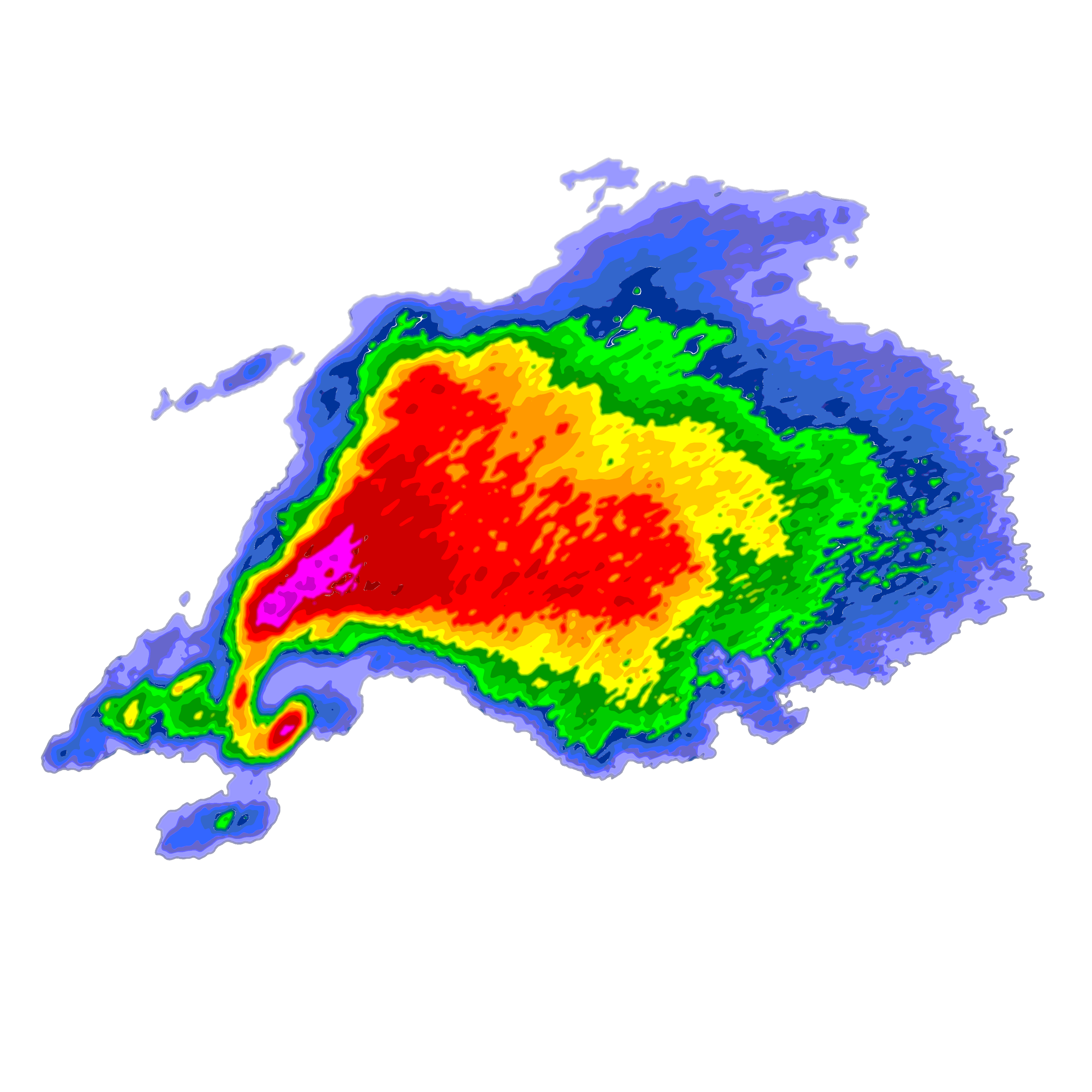
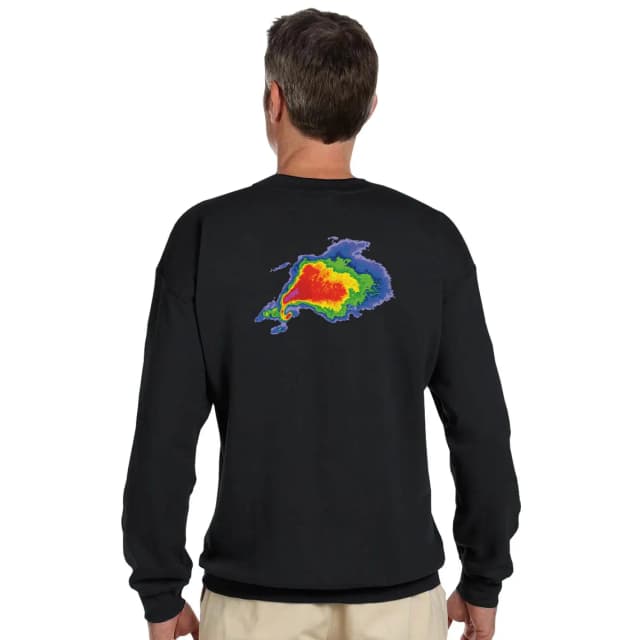
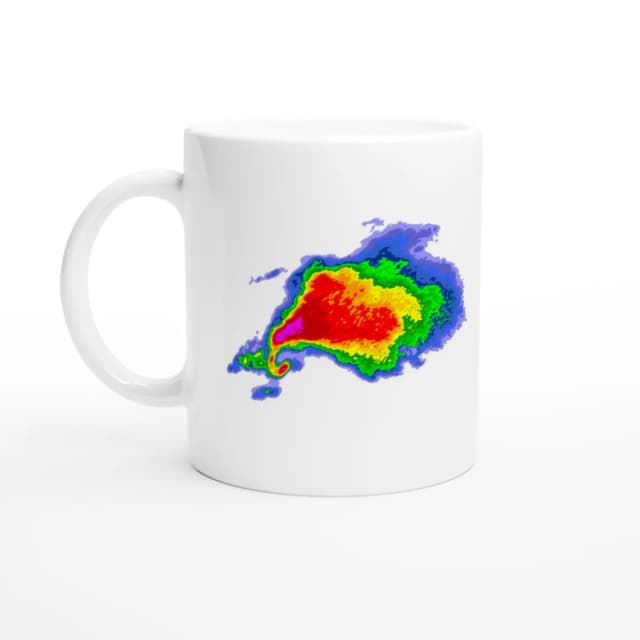
On weather radar, a hook echo is a hook-shaped appendage that appears on the southwest side of a supercell thunderstorm's precipitation core. It looks exactly like what it sounds like: a curved extension of the radar return, bending back toward the storm's updraft region. To anyone watching radar during a severe weather event, its appearance changes everything. A hook echo strongly indicates a rotating updraft and significantly elevated tornado probability.
How It Forms
A supercell thunderstorm is not a disorganised mass of convection. It is a structured, rotating system built around a mesocyclone, a deep, persistent column of rotating air within the storm's updraft. This rotation is what separates a supercell from an ordinary thunderstorm.
As the mesocyclone rotates, it pulls precipitation from the storm's main core around the back side of the updraft. Rain, hail, and debris are dragged into a curved pattern by the inflow and outflow winds interacting with the rotation. On radar, this wrapping precipitation shows up as a hook-shaped extension of the reflectivity return.
The inflow notch, the gap between the hook and the main precipitation core, marks where warm moist air is being drawn into the updraft at speed. This is also roughly where the tornado, if one forms, will be located, typically beneath the storm's wall cloud. The tighter and more defined the hook, the more organised the rotation.
It is worth noting that not every supercell produces a clean hook echo. Storm structure varies considerably, and precipitation patterns do not always cooperate with neat radar signatures. But when a well-defined hook appears, meteorologists and chasers pay close attention.
What It Tells Us
For National Weather Service forecasters, a hook echo is one of the primary radar signatures used when assessing tornado risk in real time. Its presence, especially when confirmed by velocity data showing rotation, significantly increases the probability that a tornado is occurring or is imminent.
For storm chasers, the hook echo is the signal that a storm has transitioned from interesting to potentially dangerous. It is the difference between watching a storm and positioning for an intercept. Experienced chasers read the hook's evolution over successive radar scans to judge timing, intensity, and the likely location of any tornado.
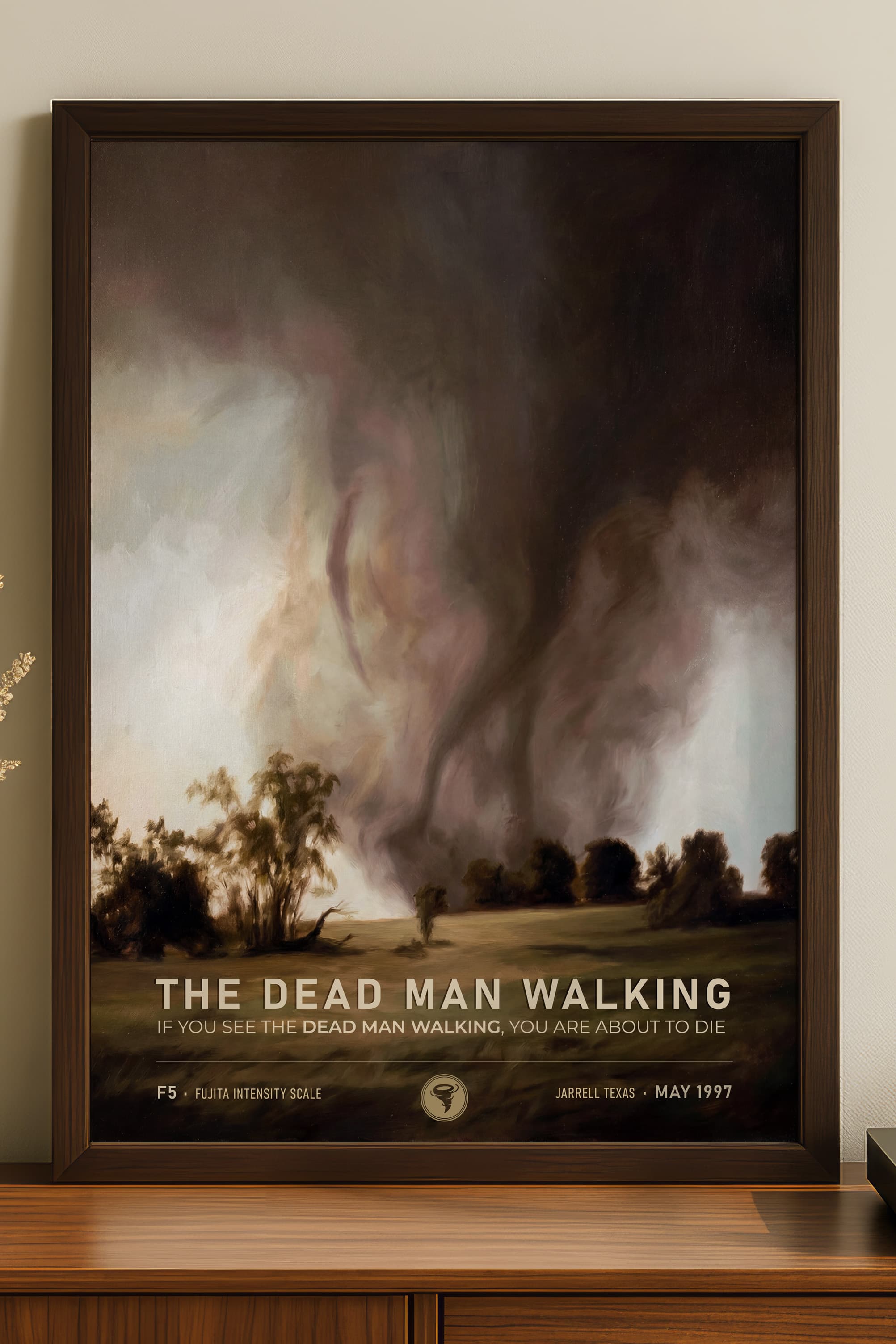
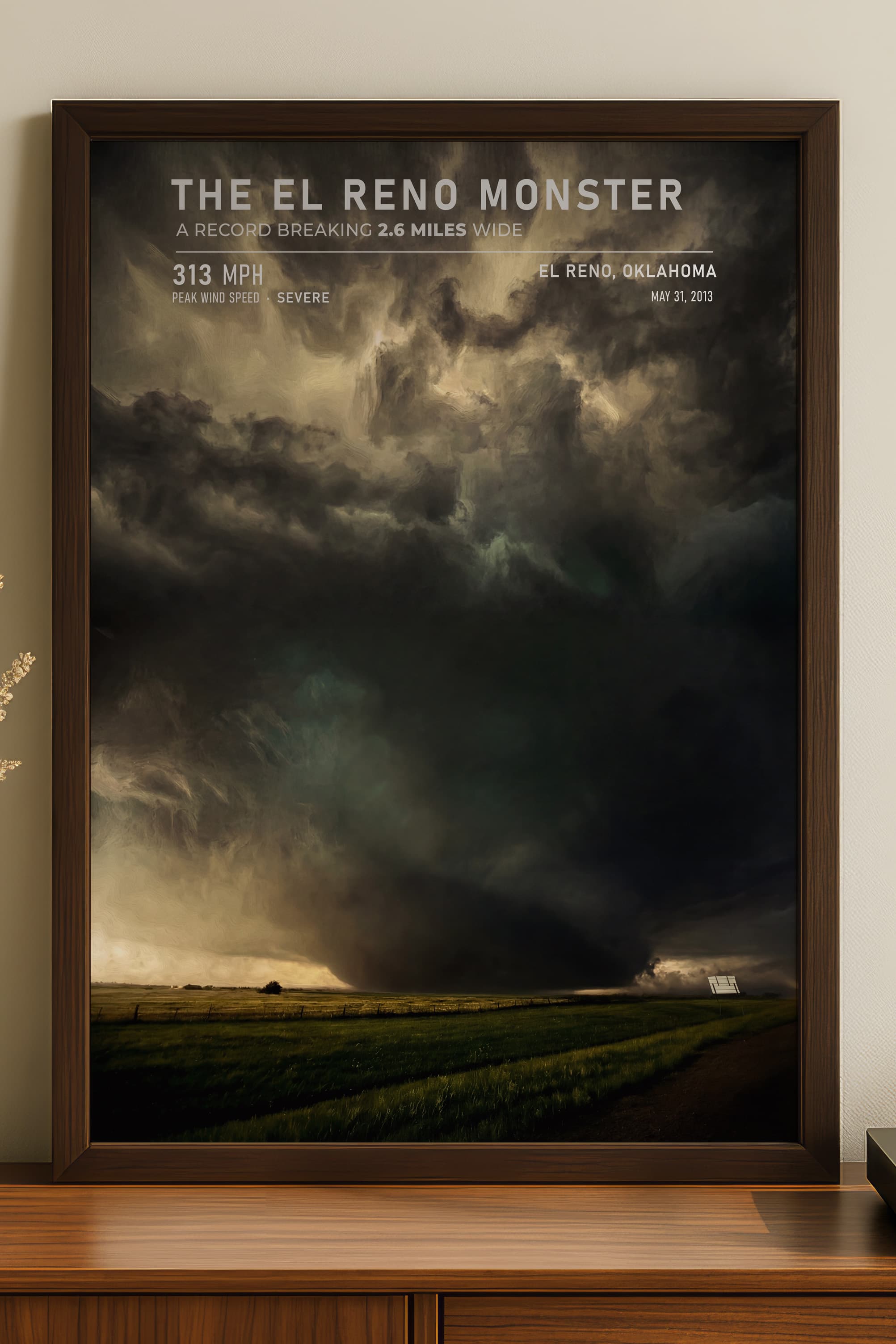
The important caveat: not every hook echo produces a tornado, and not every tornado-producing storm shows a clear hook. The relationship is probabilistic, not deterministic. A tight, well-defined hook significantly raises the odds, but meteorology does not deal in certainties. Radar is a tool, not a guarantee. However, some of the most infamous tornadoes in history, such as the Jarrell tornado and the El Reno tornado, were produced by supercells exhibiting profound hook echo signatures.
History
The hook echo was first formally identified and described by researchers at the University of Illinois in the early 1950s using the earliest generation of weather radar systems. These early radars could detect precipitation patterns but lacked the Doppler capability to measure wind speed and direction within storms.
Despite that limitation, researchers noticed that certain storms producing tornadoes showed a distinctive hook-shaped appendage on the radar display. The correlation between this shape and tornado occurrence was documented and gradually incorporated into forecasting practice.
The introduction of Doppler radar in subsequent decades transformed hook echo identification. Modern radar not only shows the precipitation pattern but overlays velocity data that reveals rotation within the storm. A hook echo confirmed by a corresponding velocity couplet, showing strong inbound and outbound winds in close proximity, is one of the clearest indicators of a mesocyclone capable of producing a tornado.
Why It Became a Symbol
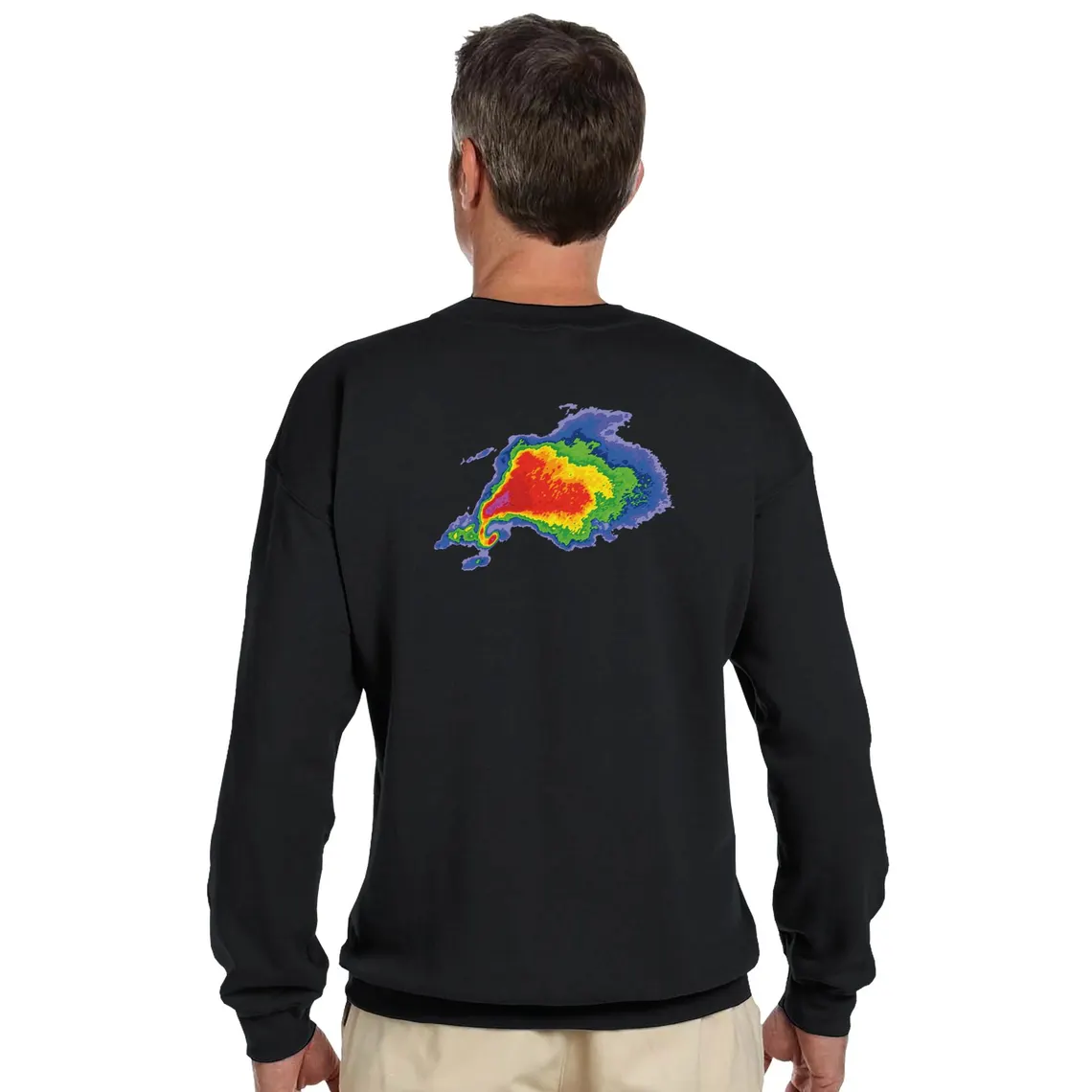
The hook echo has transcended its technical origins to become the most recognised symbol in storm chasing culture. It appears on hats, sweatshirts, mugs, and stickers throughout the chasing community. This is not just branding. The hook echo represents the moment when watching becomes real. It is the signature on the screen that tells you something significant is happening inside a storm.
If you know what a hook echo means, you might want it on your chest or on your desk.
Archives for storm chasers and meteorology obsessives
Museum-quality prints and technical apparel built on real data. Designed by those who chase.