What Is a Wall Cloud?
A wall cloud is a lowered, rotating cloud base that forms beneath a supercell's updraft. How it forms, what it indicates about tornado probability, and how chasers use it for positioning.
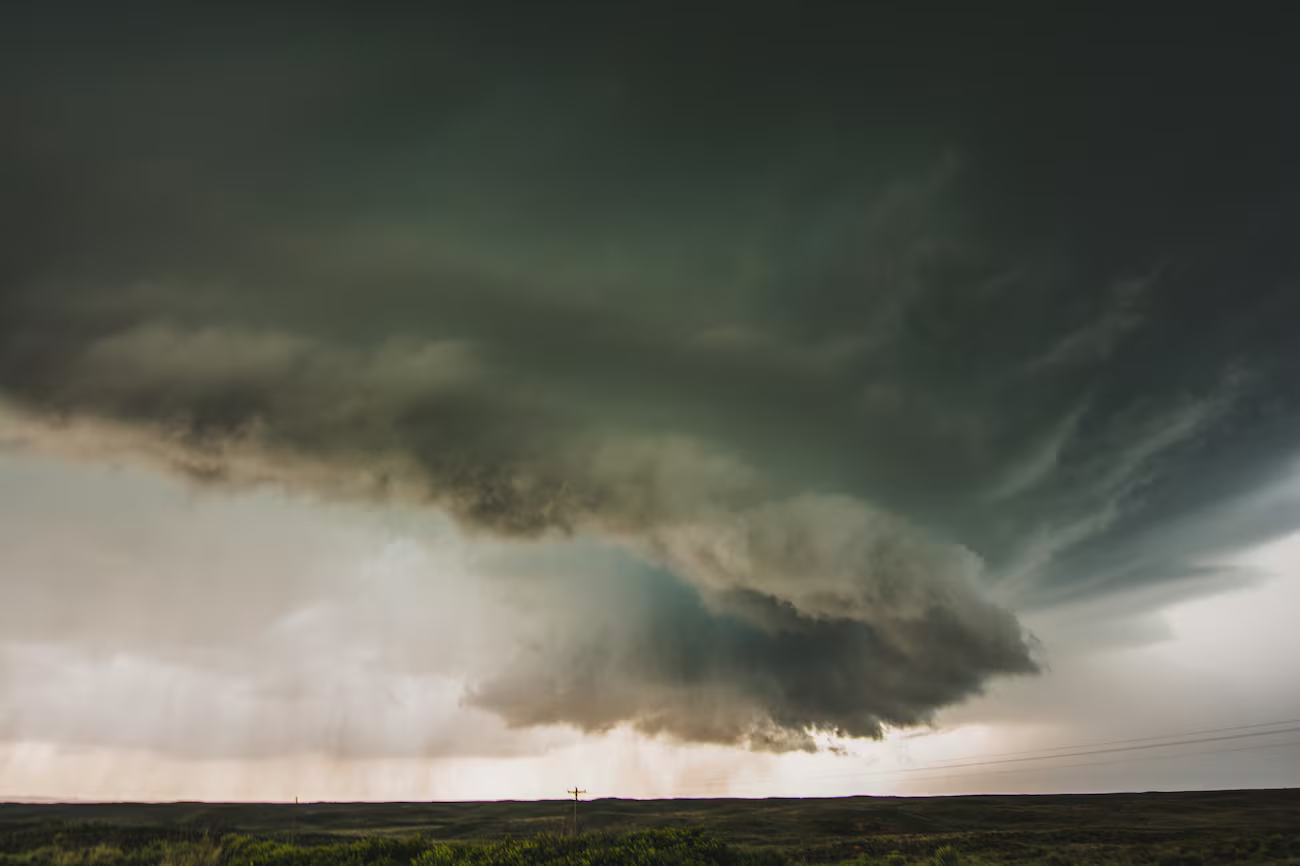
A wall cloud is a localised lowering of the cloud base beneath a supercell thunderstorm's main updraft, typically on the storm's southwest flank. It forms where the strongest inflow is entering the storm and where the mesocyclone's rotation is most concentrated near the ground. When a wall cloud is persistent, rotating, and tightening, the probability of a tornado forming beneath it increases significantly.
Why the Cloud Base Lowers
The cloud base height is determined by the lifting condensation level, the altitude at which rising air cools enough to saturate and form cloud. Beneath a supercell's updraft, air is drawn in from multiple directions. Some of that air has already passed through the storm's rainfall areas, where it has picked up additional moisture through evaporation of rain. This wetter, more humid air has a lower lifting condensation level than the surrounding environment. Where this air is drawn into the updraft, the cloud base is lower. This produces the localised drop in cloud base that defines the wall cloud.
The wall cloud sits directly beneath the rotating updraft of the supercell. It is typically a few hundred metres below the main cloud base, can be anywhere from half a mile to several miles in diameter, and in well-organised storms it rotates visibly in the same direction as the mesocyclone above it.
Relationship to the Mesocyclone and RFD
The wall cloud's location and behaviour are directly tied to the internal structure of the supercell. The mesocyclone, the deep rotating updraft that defines a supercell, concentrates its strongest rotation at lower altitudes as the storm matures. The wall cloud forms at the base of this rotating column.
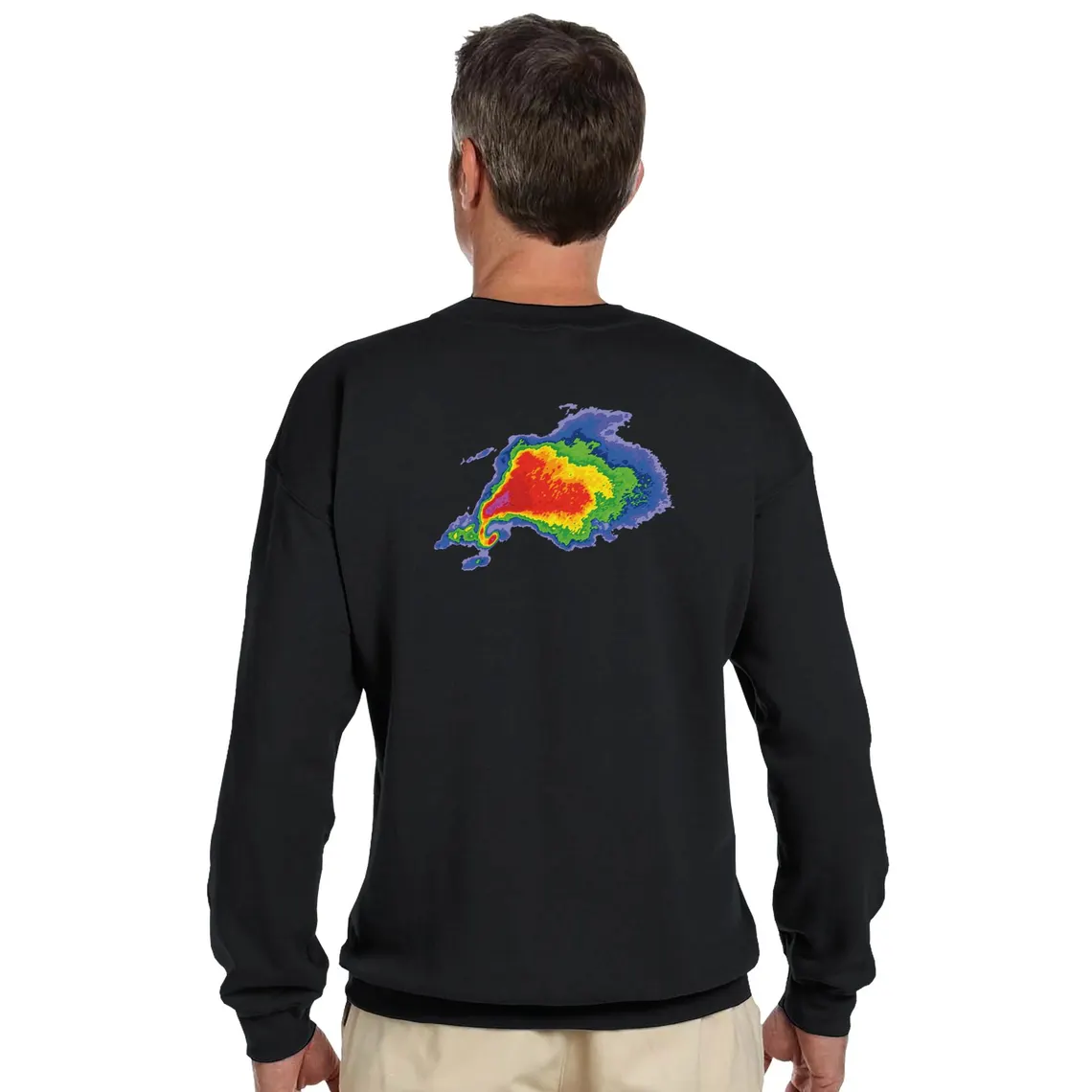
The rear flank downdraft, the stream of dry air that wraps around the back side of the mesocyclone, plays a significant role in wall cloud behaviour. As the RFD wraps around and beneath the mesocyclone, it interacts with the inflow and can accelerate the concentration of rotation near the surface. A surging RFD often precedes wall cloud tightening and, in a significant proportion of cases, tornado formation beneath the wall cloud. The hook echo on radar marks the precipitation associated with this RFD wrapping process.
Identifying a Wall Cloud
The key visual characteristics are straightforward: a wall cloud is lower than the surrounding cloud base, is attached to the cloud base directly rather than hanging beneath it as a separate formation, and in organised storms rotates visibly. The rotation can be fast or slow. In some of the most violent storms, the rotation is fast enough to see clearly from miles away. In others, it is gradual and only apparent over several minutes of observation.
Striations, the horizontal banding visible on the wall cloud surface, indicate strong inflow being drawn upward into the updraft. The faster and more defined the striations, the stronger the inflow and typically the more organised the mesocyclone above. Chasers pay close attention to whether the wall cloud is rising or descending, whether the rotation is accelerating, and whether the RFD is becoming visible as rain-free air wrapping around the back of the storm.
A persistent wall cloud that has been rotating for more than ten to fifteen minutes with increasing intensity warrants serious attention. A wall cloud that forms and then dissipates within a few minutes without significant rotation indicates the storm is not in a phase of active tornado production.
What It Means for Tornado Probability
Not every wall cloud produces a tornado. Many supercells develop wall clouds repeatedly throughout their lifespan, each one representing a mesocyclone cycle, without ever producing a confirmed tornado. The relationship between wall cloud and tornado is probabilistic. What the wall cloud tells you is that the storm has the internal structure capable of producing a tornado, and that the process of concentrating rotation near the surface is underway.
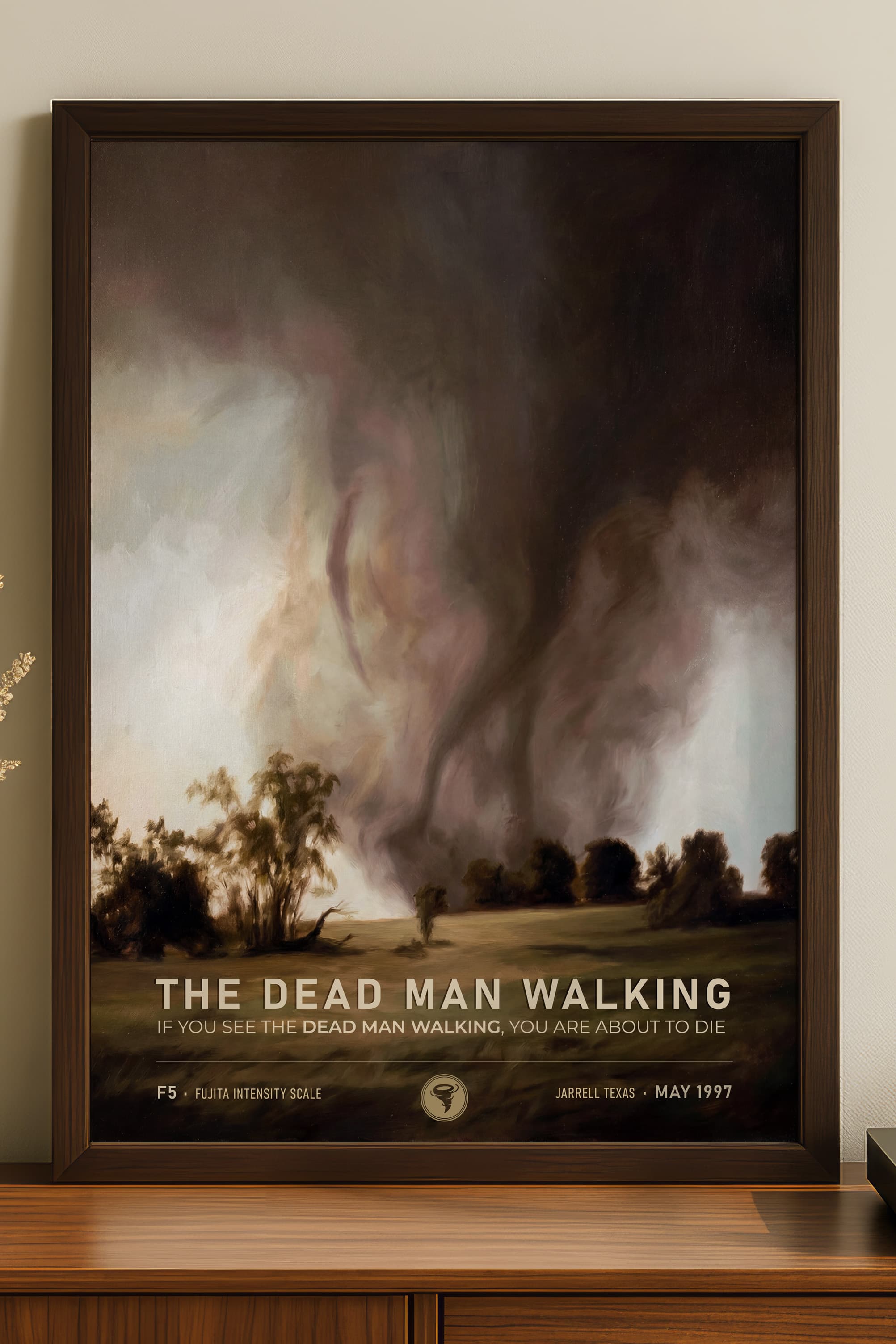
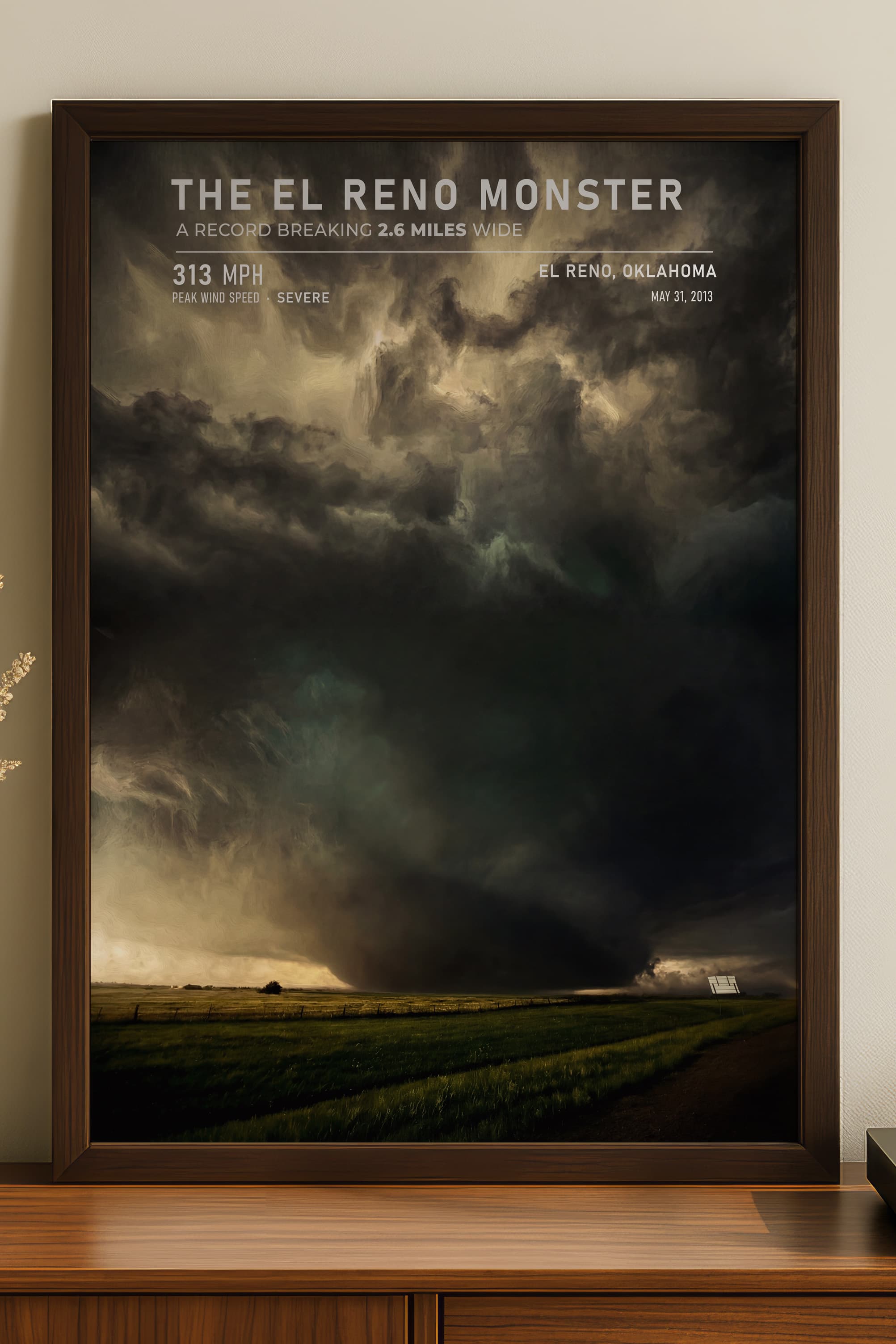
The Jarrell tornado of 1997 and the El Reno tornado of 2013 both developed beneath persistent, rotating wall clouds in the minutes before touchdown. Both were produced by exceptionally well-organised supercells where the relationship between mesocyclone, RFD, and inflow was textbook even if the outcomes were extreme.
How Chasers Use Wall Cloud Observation
Visual wall cloud observation is one of the primary ways chasers assess a storm when they are positioned close enough for a clear view. Radar tells you about the storm's internal structure from a distance. The wall cloud tells you what the storm is doing right now, at cloud base level, directly above where a tornado would form.
Experienced chasers watch wall cloud behaviour to decide whether to hold their position, move closer, or retreat. A wall cloud that is rotating faster and lowering further signals an escalating situation. A wall cloud that is rising and losing definition signals the storm is weakening or cycling. Knowing which way the storm is moving relative to your position, and maintaining an escape route, is fundamental. The guidance on safe chasing fundamentals covers this in more detail.
The wall cloud is the most operationally important visual feature of a supercell for anyone in the field. Everything else on radar and satellite narrows down where and when to look. The wall cloud tells you what you are looking at when you get there.
Archives for storm chasers and meteorology obsessives
Museum-quality prints and technical apparel built on real data. Designed by those who chase.