What Is Tornado Alley?
Tornado Alley is the informal name for the region of the central United States that produces the highest concentration of tornadoes on Earth. Why it exists, where it is, and whether the traditional definition still holds.
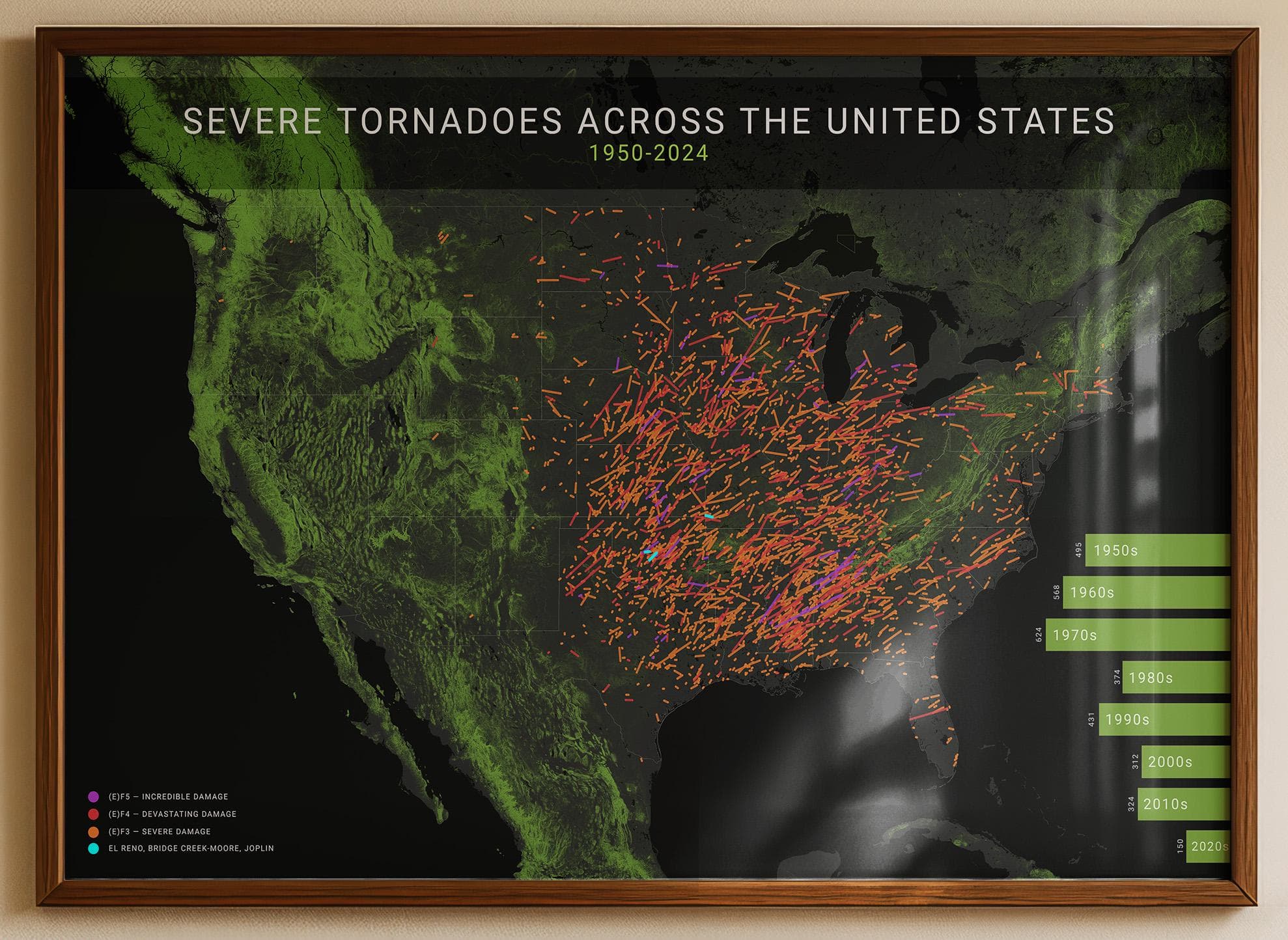
Tornado Alley is the informal name given to a region of the central United States stretching roughly from northern Texas through Oklahoma, Kansas, and into Nebraska, where atmospheric conditions combine more frequently than anywhere else on Earth to produce violent supercell thunderstorms and tornadoes. The term is geographic shorthand rather than a formal meteorological boundary. There is no official Tornado Alley, only a region where the relevant conditions align exceptionally often.
Why This Region Produces So Many Tornadoes
The central United States sits at the intersection of three distinct air masses that rarely interact to this degree anywhere else in the world.
Warm, moist air flows northward from the Gulf of Mexico, driven by a semi-permanent area of high pressure over the Gulf that pumps moisture into the lower atmosphere across the central plains. This creates a deep layer of humid air at low levels that provides the moisture and instability that fuels severe thunderstorms.
Dry, continental air moves eastward off the elevated terrain of the Rocky Mountains and Mexican Plateau. This drier air sits above the moist Gulf layer in what is called a capping inversion or lid, a layer of warm dry air that suppresses convection during the daytime and allows energy to accumulate in the atmosphere below it.
When conditions break the cap, typically late afternoon in spring, the accumulated instability releases explosively. Thunderstorms develop rapidly and often reach severe intensity within an hour of initiation.
The critical fourth ingredient is wind shear. The jet stream sits over the central plains during spring, driving strong upper-level winds from the west and southwest while surface winds continue from the south. This combination of southerly surface flow and westerly upper flow creates the directional and speed shear needed to generate the horizontal vorticity that supercell thunderstorms convert into mesocyclones. The geography is not incidental. It is the reason.
Classic Events
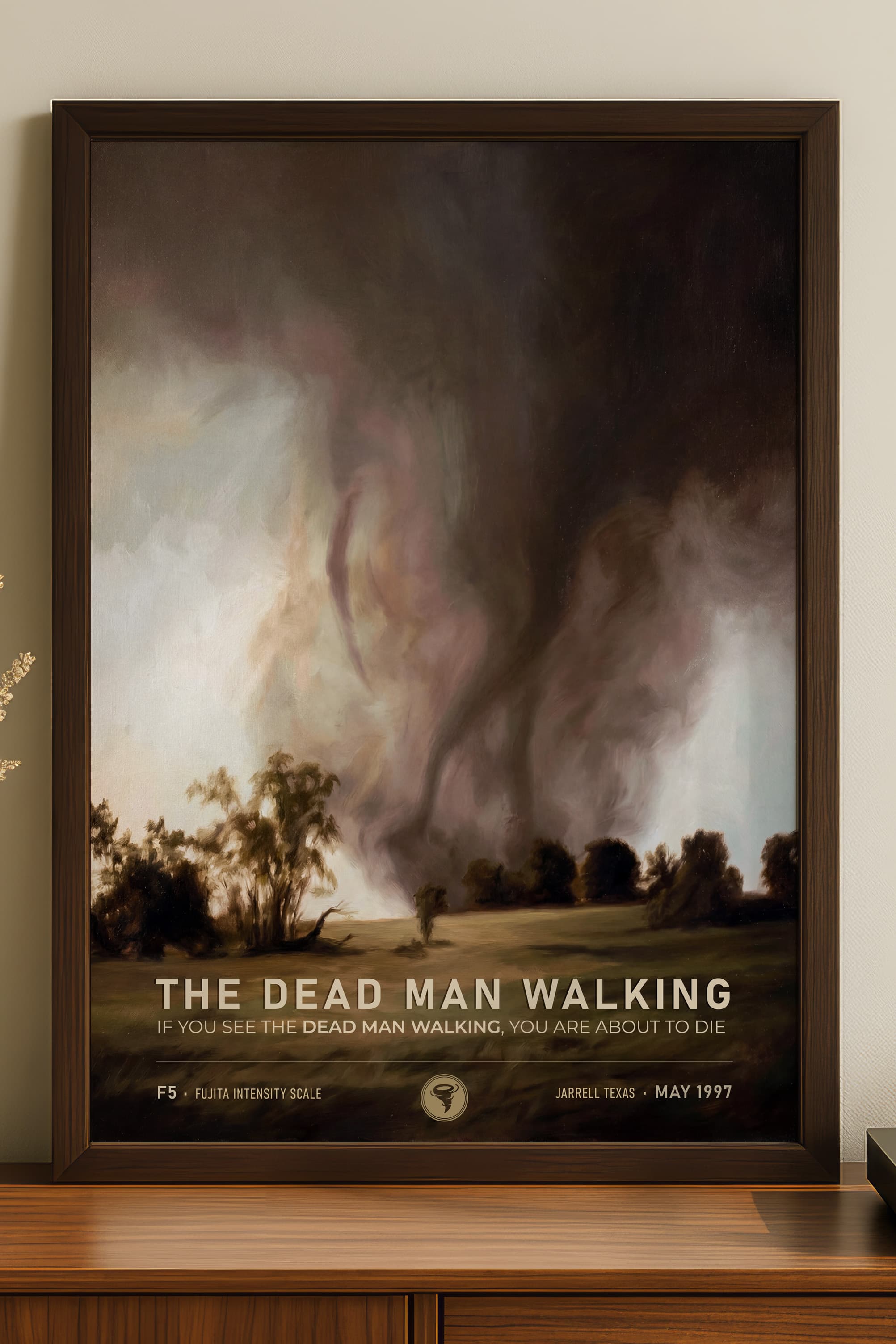
The combination of ingredients that defines Tornado Alley has produced some of the most destructive tornado events ever documented. The 1974 Super Outbreak and the 2011 Super Outbreak both involved supercell thunderstorms moving through environments with near-ideal combinations of moisture, instability, and wind shear. The 1999 Oklahoma tornado outbreak produced the strongest measured surface winds in any tornado to that point. Jarrell, Texas in 1997 produced one of the slowest-moving and most destructive tornadoes ever recorded in the state. The Jarrell tornado demonstrated that Tornado Alley's worst events are not a matter of proximity to a particular city but of atmospheric setup.
The Dixie Alley Question
Over the past two decades, researchers have increasingly noted a shift in tornado climatology that challenges the traditional Tornado Alley framing. States in the southeast United States, particularly Mississippi, Alabama, Tennessee, and Arkansas, the region informally referred to as Dixie Alley, have been experiencing a higher proportion of significant tornado events.
The reasons for this are not entirely resolved. The southeast has different seasonal dynamics than the central plains. Tornadoes there occur more frequently in autumn and winter, when the jet stream migrates south and Gulf moisture remains accessible. The terrain and land cover differs from the open plains. And critically, population distribution is different. Urban sprawl, abundant tree cover, and hilly terrain in the southeast means that tornadoes often remain obscured until they are very close.
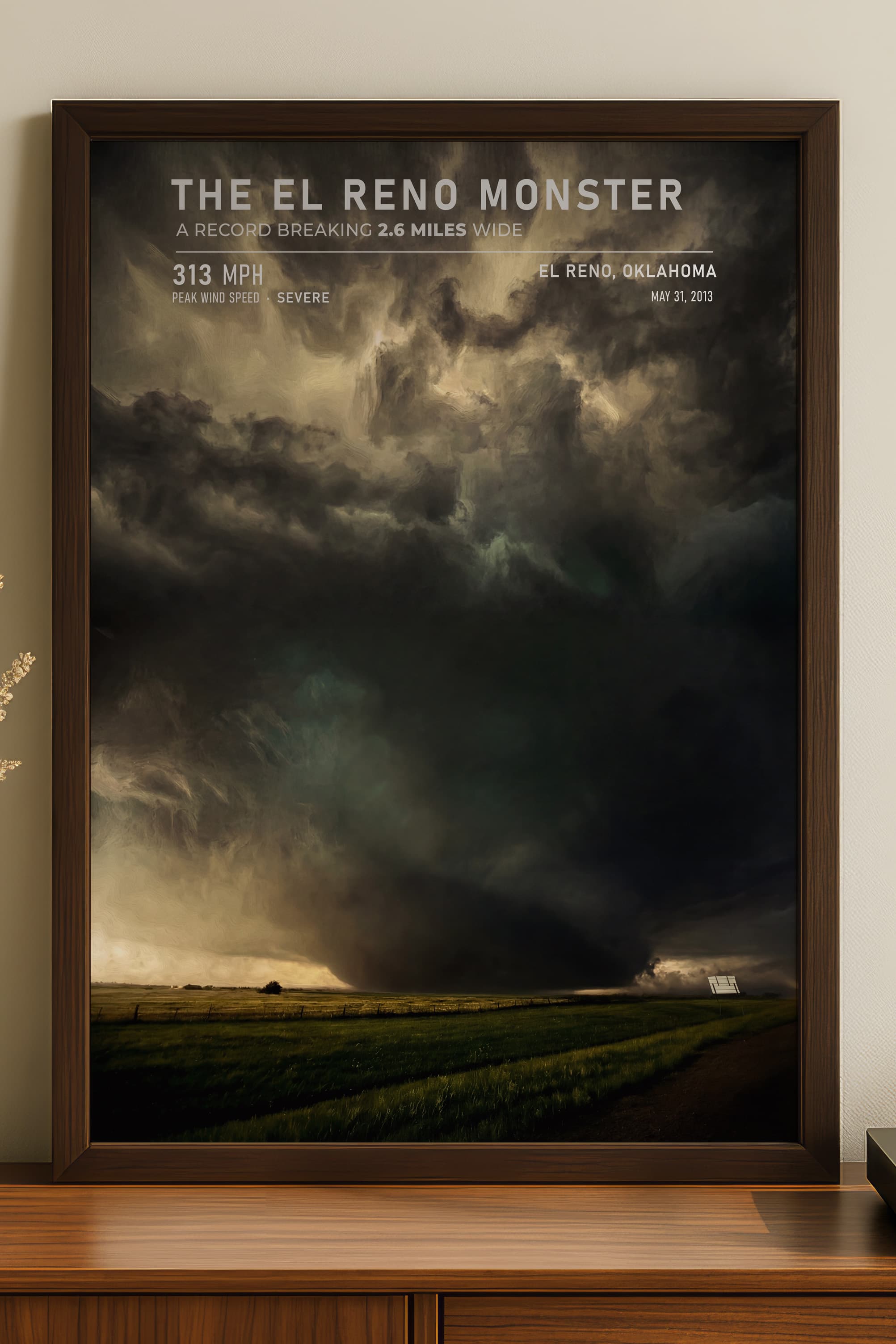
The El Reno tornado of 2013 was a central plains event, but the broader shift in documented significant tornadoes toward the southeast suggests that the Tornado Alley label, always informal, may be increasingly misleading for the public it is meant to inform.
Whether the Label Still Matters
Tornado Alley as a concept remains useful as a rough description of where the atmospheric ingredients combine most reliably and most often in spring. The Oklahoma-Kansas corridor still produces more tornadoes per unit area than anywhere else in the world during April and May. The clustering of spring tornado activity in the central plains is not a historical anomaly. It reflects persistent features of North American geography and climate.
But the label can obscure as much as it reveals. Significant tornadoes occur in every US state. The risk is not confined to a corridor. Wherever Gulf moisture can reach, wherever wind shear develops, and wherever a thunderstorm can grow into a supercell, the conditions for a tornado exist. The central plains simply optimise all of these factors simultaneously and reliably.
What Tornado Alley really describes is a seasonal probability gradient. It is higher in the centre. It is not zero anywhere east of the Rockies.
Archives for storm chasers and meteorology obsessives
Museum-quality prints and technical apparel built on real data. Designed by those who chase.